

The manufacturing of gears involves several critical steps to ensure they meet the required specifications and performance standards. Here`s a detailed outline of the typical gear manufacturing process:
1. Design and Planning
1.1 Gear Design
Determine Gear Specifications: This includes deciding on the type of gear (e.g., spur, helical, bevel), material, dimensions, module, number of teeth, pressure angle, and other relevant parameters.
3D Modeling: Use CAD software to create a detailed 3D model of the gear. This model includes exact geometrical shapes, ensuring precision in the manufacturing process.
1.2 Material Selection
Choice of Materials: Depending on the application, gears can be made from a variety of materials such as steel, aluminum, brass, plastics, etc.
Material Properties: Consider properties such as hardness, tensile strength, and corrosion resistance to select the appropriate material for the gear.

2. Material Preparation
2.1 Cutting the Material
Raw Material Blocks: The selected material is cut into blocks or blanks that are slightly larger than the final dimensions of the gear. This allows for machining tolerances.
2.2 Forging (Optional)
Hot Forging: For certain gears, especially those requiring high strength, the blanks might be forged. This process strengthens the material by altering its grain structure.
3. Rough Machining
3.1 Turning
Lathe Machining: The raw material blanks are placed on a lathe and turned to create a cylindrical shape. This process defines the gear`s overall diameter and width.
3.2 Drilling and Boring
Hole Drilling: If the gear requires a central hole (e.g., bore), drilling and boring processes are used to create this feature with precise dimensions.
4. Tooth Cutting
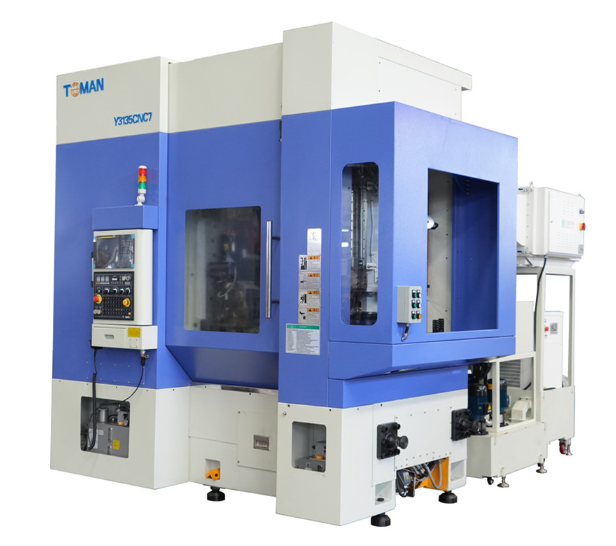
4.1 Gear Hobbing
Hobbing Machine: The gear blank is mounted on a hobbing machine. A hob (a specialized cutting tool) rotates and cuts the gear teeth into the blank.
Synchronization: The relative rotation between the hob and the gear blank is controlled to accurately form the gear teeth profile.
4.2 Gear Shaping (Alternative Method)
Shaping Machine: Involves using a gear shaper cutter to cut teeth into the gear blank. Suitable for internal gears and gears with specific profiles.
Reciprocating Motion: The cutter moves in a reciprocating motion while rotating the gear blank to form the teeth.
5. Heat Treatment
5.1 Hardening
Heat Treatment: Gears, especially those made of steel, undergo heat treatment processes such as carburizing, quenching, and tempering to improve hardness and wear resistance.
5.2 Stress Relieving
Reducing Residual Stresses: Heat-treated gears may undergo a stress-relieving process to minimize residual stresses and prevent future warping.
6. Finishing Processes
6.1 Grinding
Gear Grinding: Used to achieve high surface finish and precision. The gears are ground using precision grinding machines to ensure the correct tooth profile and surface quality.
6.2 Deburring
Removing Burrs: Small burrs and sharp edges left from cutting processes are removed to ensure smooth operation and prevent damage.
7. Quality Inspection
7.1 Dimensional Inspection
Measurement Tools: Use calipers, micrometers, and coordinate measuring machines (CMM) to verify that dimensions and geometries meet design specifications.
7.2 Functional Testing
Performance Tests: Gears are tested under load to ensure they perform as expected. Parameters such as noise, vibration, and efficiency are evaluated.
8. Surface Treatment (Optional)
8.1 Coating
Surface Coating: Gears may undergo surface treatments like plating, coating, or painting to protect against corrosion and wear.
9. Assembly and Packaging
9.1 Assembly
Gear Assemblies: Gears are assembled with other components if required (e.g., shafts, bearings) to form gearboxes or other mechanisms.
9.2 Packaging
Protective Packaging: Finished gears are carefully packaged to prevent damage during transportation and storage.
By following these steps, manufacturers can produce gears that meet stringent quality standards and perform reliably in various applications.
About Zhejiang Toman Intelligent Technology Co., Ltd. (Toman)
Toman is a company that adheres to the strategic vision of to be the leader in the professional field, with the mission of innovation to drive customer value enhancement, and the business philosophy of WISE, ALWAYS KEEP STEP AHEAD. In operation since 2006, the company includes the complete range of gear hobbing machine, gear cutting machine, gear machining compound machine tools, gear shaving machine, automatic production units, automatic turning production lines, and MES manufacturing execution system, etc. TOMAN today, is recognised as an industry leader for machines in China.
Toman cutting machines:
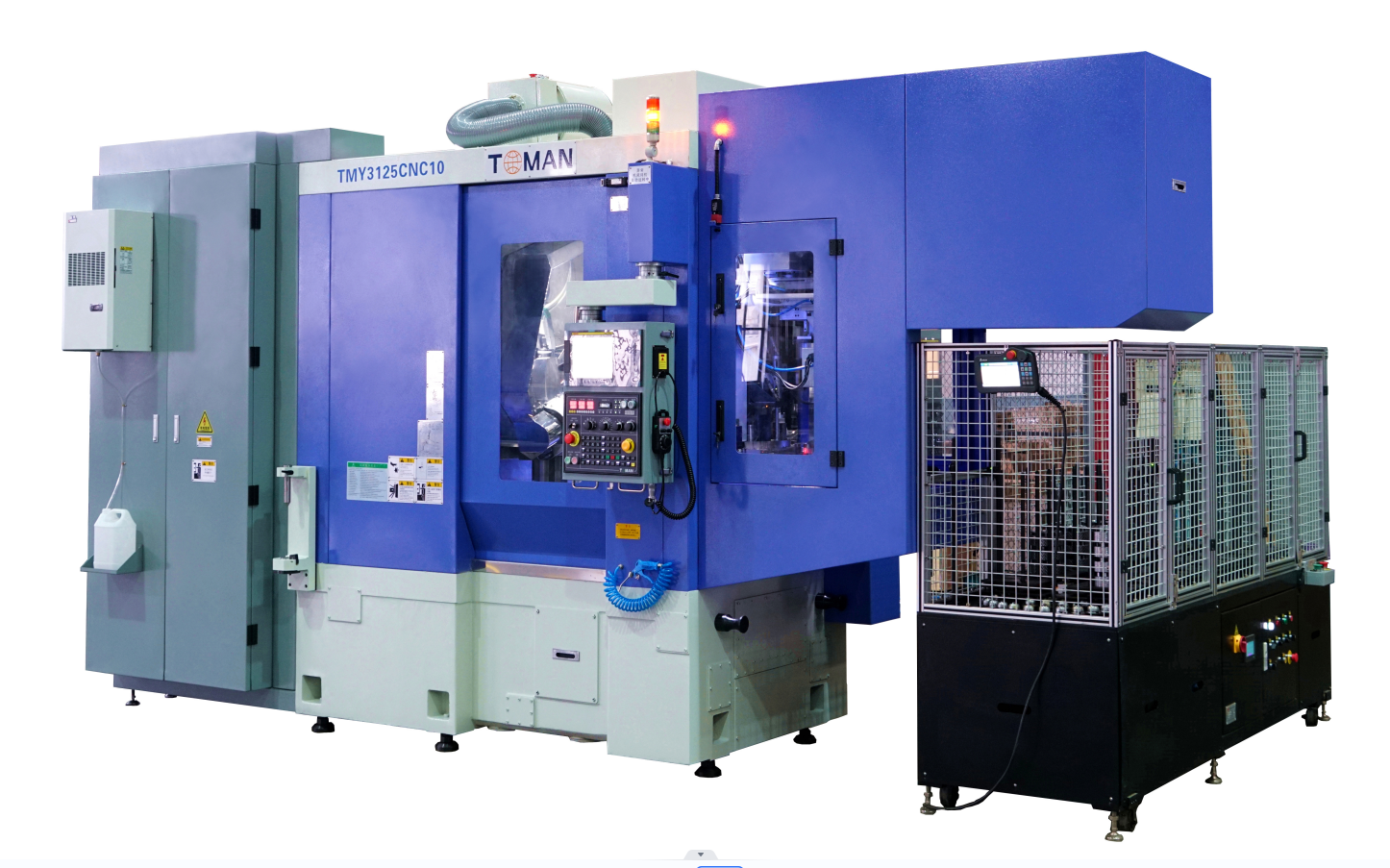
CNC high precision gear hobbing machine, gear chamfering machine, gear shaving machine, gear hobbing machine with integrated chamfering station etc.
-Profitable -Intelligent -Accurate
Our machines are suitable for commercial vehicle gear, passenger vehicle gear, construction machinery gear, especially for the processing of new energy vehicle gear.
For more information about cnc gear cutting machines, please visit our website:
www.zjtoman.com
www.tomanmachines.com
For further information, please contact:
Sharon Gong
Master of Mechanical Engineering
Whatsapp/Wechat: +8613589398142
Mail: sharon@zjtoman.com
Skype: sharon.gong525