

Worm gears are essential components in many mechanical systems, known for their ability to provide high torque and smooth operation in compact spaces. Manufacturing worm gears requires specialized techniques to ensure precision and efficiency. This article provides an overview of worm gear manufacturing methods and addresses common gear hobbing adjustment issues.
1. Worm Gear Manufacturing Methods
Worm gear manufacturing involves several methods, each with its own advantages and applications. The most common methods include:
1.1 Hobbing
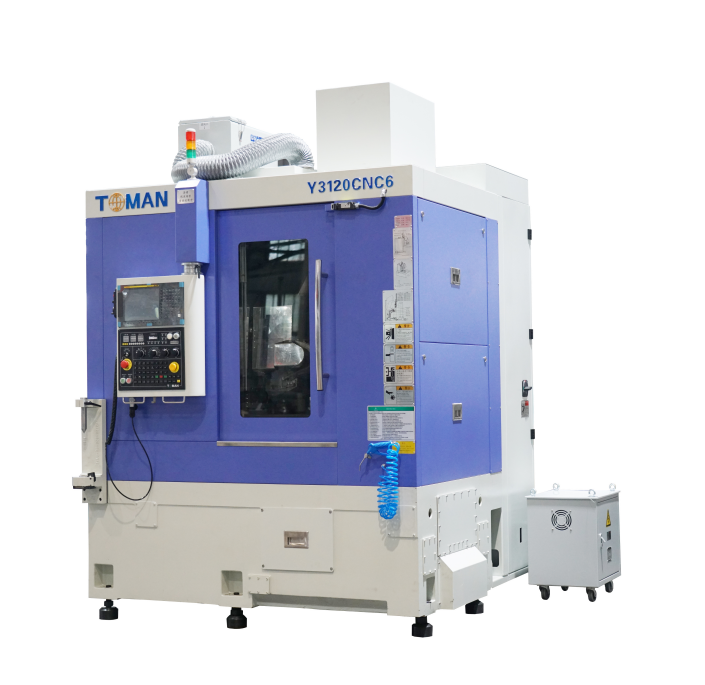
Hobbing is a widely used method for manufacturing worm gears. It involves using a hob, a specialized cutting tool, to generate the gear teeth. The process is highly efficient and suitable for mass production. Key steps in the hobbing process include:
Setup: The workpiece (worm gear blank) is mounted on the worktable, and the hob is installed on the spindle.
Cutting: The hob and workpiece rotate in synchronization, with the hob cutting the gear teeth as it moves along the workpiece.
Finishing: After hobbing, the gear may undergo finishing processes such as deburring and grinding to achieve the desired surface quality and precision.
1.2 Milling
Milling is another method used for worm gear manufacturing, particularly for low-volume or custom gears. It involves using a milling machine to cut the gear teeth. The process includes:
Setup: The gear blank is mounted on the milling machine table, and the milling cutter is positioned.
Cutting: The milling cutter moves along the gear blank, cutting the teeth to the required profile.
Finishing: Similar to hobbing, the gear may require finishing processes to ensure accuracy and surface quality.
1.3 Grinding
Grinding is used for high-precision worm gears, especially those requiring tight tolerances and smooth surfaces. The process involves:
Setup: The gear blank is mounted on a grinding machine, and the grinding wheel is positioned.
Grinding: The grinding wheel removes material from the gear blank, forming the teeth with high precision.
Inspection: The finished gear is inspected to ensure it meets the required specifications.
2. Gear Hobbing Adjustments
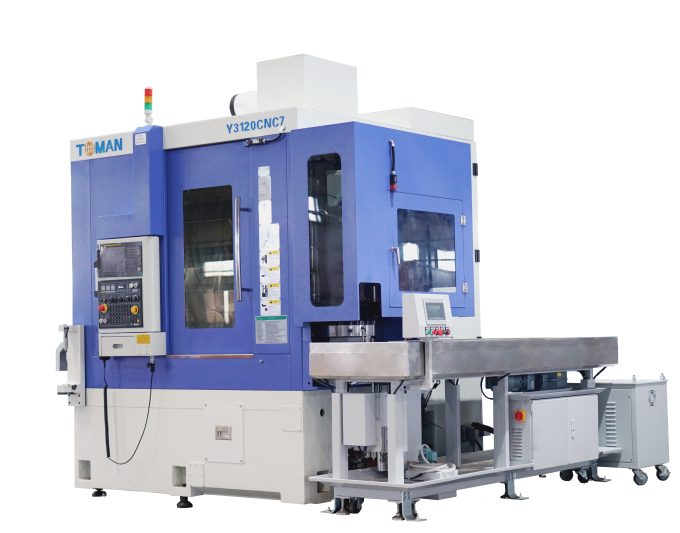
Adjusting the gear hobbing process is crucial to achieving the desired gear quality and precision. Common adjustments include:
2.1 Hob Positioning
Proper positioning of the hob relative to the workpiece is essential for accurate gear cutting. Key considerations include:
Axial Position: Ensuring the hob is correctly aligned with the gear blank's axis to avoid uneven tooth profiles.
Radial Position: Adjusting the hob's radial position to achieve the desired depth of cut and tooth thickness.
2.2 Cutting Speed and Feed Rate
Optimizing the cutting speed and feed rate is vital for efficient and precise gear hobbing. Factors to consider include:
Cutting Speed: Higher cutting speeds can improve productivity but may lead to increased tool wear. Balancing speed and tool life is critical.
Feed Rate: The feed rate affects the material removal rate and surface finish. Adjusting the feed rate based on the material and gear specifications ensures optimal results.
2.3 Hob Alignment
Ensuring the hob is properly aligned with the gear blank is crucial for accurate tooth profiles. Misalignment can lead to:
Tooth Profile Errors: Incorrect alignment can cause deviations in the tooth profile, affecting gear performance.
Surface Finish Issues: Misalignment may result in poor surface finish, requiring additional finishing processes.
2.4 Tool Wear and Maintenance
Regular monitoring and maintenance of the hob are essential to maintain cutting accuracy and prolong tool life. Key practices include:
Inspection: Regularly inspecting the hob for wear and damage to identify issues early.
Sharpening: Periodically sharpening the hob to maintain cutting performance and accuracy.
Replacement: Replacing worn or damaged hobs to ensure consistent gear quality.
Conclusion
Worm gear manufacturing involves various methods, each suited to different production requirements. Hobbing, milling, and grinding are the primary techniques used to produce high-quality worm gears. Proper adjustments in the gear hobbing process, including hob positioning, cutting speed, feed rate, and alignment, are crucial for achieving precision and efficiency. By understanding and implementing these practices, manufacturers can ensure the production of reliable and high-performance worm gears.
About Zhejiang Toman Intelligent Technology Co., Ltd. (Toman)
Toman is a company that adheres to the strategic vision of to be the leader in the professional field, with the mission of innovation to drive customer value enhancement, and the business philosophy of WISE, ALWAYS KEEP STEP AHEAD. In operation since 2006, the company includes the complete range of gear hobbing machine, gear cutting machine, gear machining compound machine tools, gear shaving machine, automatic production units, automatic turning production lines, and MES manufacturing execution system, etc. TOMAN today, is recognised as an industry leader for machines in China.
Toman cutting machines:
CNC high precision gear hobbing machine, gear chamfering machine, gear shaving machine, gear hobbing machine with integrated chamfering station etc.
-Profitable -Intelligent -Accurate
Our machines are suitable for commercial vehicle gear, passenger vehicle gear, construction machinery gear, especially for the processing of new energy vehicle gear.
For more information about cnc gear cutting machines, please visit our website:
www.zjtoman.com
www.tomanmachines.com
For further information, please contact:
Sharon Gong
Master of Mechanical Engineering
Whatsapp/Wechat: +8613589398142
Mail: sharon@zjtoman.com