

In the manufacturing industry, gears are the cornerstone of countless mechanical systems, and their precision directly affects the performance, durability, and noise levels of machinery. Hobbing machines are widely used for gear production, but achieving high - precision gears requires a combination of meticulous preparation, proper operation, and regular maintenance. This article will explore the key strategies to ensure the precision of gears machined by hobbing machines.
1. Precise Machine Setup
Leveling and Alignment
The foundation of accurate gear machining starts with the proper setup of the hobbing machine. Begin by ensuring the machine is perfectly level. Use a high - precision spirit level to check and adjust the machine's base. An uneven machine can cause vibrations during operation, which will translate into inaccuracies in the gear teeth. Once leveled, align the various components of the hobbing machine. This includes aligning the spindle, the worktable, and the hob - holding device. Precise alignment ensures that the relative positions of the cutting tool (hob) and the workpiece are maintained within tight tolerances, guaranteeing uniform gear tooth profiles.

Tool Installation and Calibration
Installing the hob correctly is crucial. Use the appropriate tool - holding fixtures and ensure that the hob is centered and firmly clamped. Any eccentricity in the hob installation will result in non - uniform gear teeth. After installation, calibrate the hob's position and orientation. This can be done using dial indicators or laser - based alignment tools. Calibration helps to establish the exact position of the hob relative to the workpiece, enabling accurate gear cutting.
2. Optimal Parameter Selection
Cutting Speed, Feed Rate, and Depth of Cut
Selecting the right machining parameters is a balancing act. The cutting speed affects both the efficiency of the machining process and the quality of the gear. For different gear materials, such as steel, aluminum, or brass, there are recommended cutting - speed ranges. For example, when machining medium - carbon steel gears, a cutting speed of around 50 - 80 m/min might be suitable. If the speed is too high, it can cause excessive tool wear and heat generation, which may lead to gear distortion. If it's too low, the production efficiency will be compromised.
The feed rate determines how much the hob advances along the workpiece in each revolution. A proper feed rate is essential for achieving the desired surface finish and tooth profile accuracy. A high feed rate can cause rough surfaces and inaccurate tooth profiles, while a low feed rate can be time - consuming. A common feed - rate range for gear hobbing is 0.2 - 0.4 mm/rev, but this should be adjusted based on the gear material and the specific requirements of the job.

The depth of cut is another critical parameter. It should be carefully selected according to the gear's module and the machining process. For rough machining, a relatively larger depth of cut can be used to quickly remove most of the material. However, for finishing machining, a smaller depth of cut is required to achieve the final tooth profile accuracy and surface quality.
3. High - Quality Tooling and Workpiece Materials
Hobbing Tools
Invest in high - quality hobs. The quality of the hob significantly impacts the gear's precision. Hobs made from premium materials, such as high - speed steel (HSS) with advanced coatings or carbide, offer better wear resistance and cutting performance. A well - designed hob with sharp teeth and accurate geometries will ensure that the gear teeth are machined with high precision. Regularly inspect the hobs for wear and replace them when they show signs of significant degradation. Worn hobs can cause inaccuracies in the gear teeth, such as uneven tooth thickness and poor surface finish.
Workpiece Materials
The quality of the workpiece material also plays a vital role. Ensure that the material used for gear production meets the required specifications. Variations in material properties, such as hardness and grain structure, can affect the machining process and the final gear precision. For example, if the material has inconsistent hardness, it may lead to uneven cutting and inaccurate tooth profiles. Use materials from reliable suppliers and conduct material testing if necessary to ensure their quality.
4. Operator Training and Monitoring
Skilled Operators
Well - trained operators are the key to achieving high - precision gear machining. Operators should have in - depth knowledge of hobbing machine operation, including machine setup, parameter selection, and troubleshooting. They should be able to read and interpret gear drawings accurately and understand the impact of different machining parameters on gear precision. Provide regular training to operators to keep them updated with the latest techniques and best practices in gear hobbing.
Process Monitoring
During the gear - hobbing process, operators should closely monitor the machining operation. Observe the cutting process for any signs of abnormal vibrations, noises, or chip formation. Abnormalities can indicate problems such as tool wear, improper parameter settings, or workpiece - clamping issues. Use in - process monitoring tools, such as force sensors or acoustic emission sensors, to detect potential problems early. These sensors can provide real - time data on the machining process, allowing operators to make timely adjustments to ensure gear precision.
5. Regular Machine Maintenance
Lubrication and Cleaning
Regular maintenance of the hobbing machine is essential for its optimal performance. Lubricate all the moving parts of the machine, including the spindle, bearings, and slides, at the recommended intervals. Proper lubrication reduces friction, minimizes wear, and helps to maintain the machine's accuracy. Use high - quality lubricants that are suitable for the specific requirements of the hobbing machine.
Clean the machine thoroughly after each use. Remove chips, debris, and coolant residue from the machine's surface, worktable, and tool - holding devices. Chips and debris can accumulate and interfere with the machining process, causing inaccuracies. Cleaning also helps to prevent corrosion and extends the lifespan of the machine.
Component Inspection and Replacement
Periodically inspect the critical components of the hobbing machine, such as the spindle, bearings, and drive belts. Check for signs of wear, looseness, or damage. Replace any worn - out or damaged components promptly. For example, worn - out bearings can cause spindle run - out, which will result in inaccurate gear machining. By replacing components in a timely manner, you can ensure that the machine continues to operate with high precision.
In conclusion, ensuring the precision of gears machined by hobbing machines requires a comprehensive approach that covers machine setup, parameter selection, tooling and material quality, operator training, and regular maintenance. By implementing these strategies, manufacturers can produce high - quality gears that meet the stringent requirements of modern mechanical systems. If you have any questions or need further assistance in improving gear - hobbing precision, please feel free to contact our technical team.
About Zhejiang Toman Intelligent Technology Co., Ltd. (Toman)
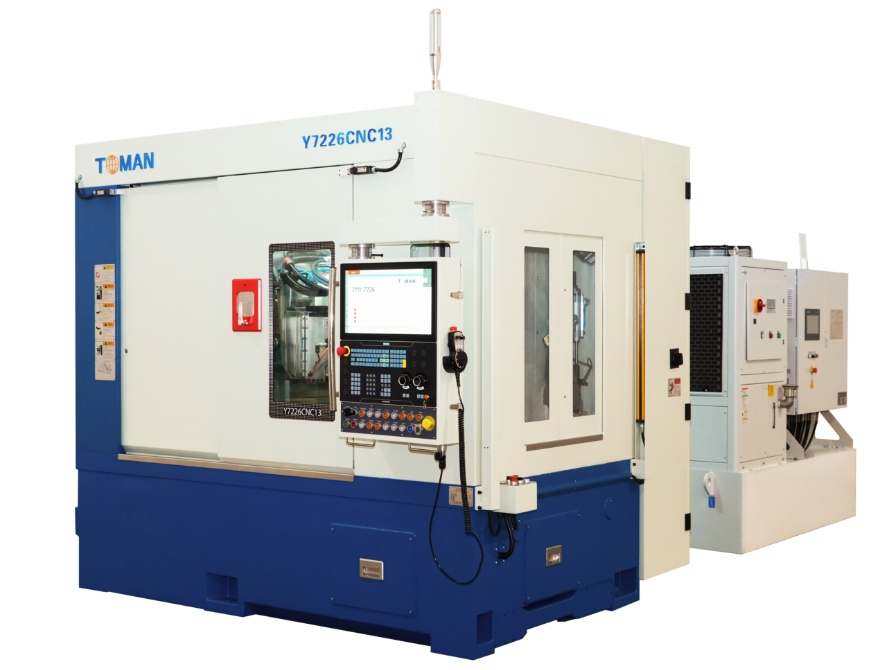
Toman is a company that adheres to the strategic vision of to be the leader in the professional field, with the mission of innovation to drive customer value enhancement, and the business philosophy of WISE, ALWAYS KEEP STEP AHEAD. In operation since 2006, the company includes the complete range of gear hobbing machine, gear cutting machine, gear machining compound machine tools, gear shaving machine, automatic production units, automatic turning production lines, and MES manufacturing execution system, etc. TOMAN today, is recognised as an industry leader for machines in China.
Toman cutting machines:
CNC high precision gear hobbing machine, gear chamfering machine, gear shaving machine, gear hobbing machine with integrated chamfering station etc.
-Profitable -Intelligent -Accurate
Our machines are suitable for commercial vehicle gear, passenger vehicle gear, construction machinery gear, especially for the processing of new energy vehicle gear.
For more information about cnc gear cutting machines, please visit our website:
www.zjtoman.com
www.tomanmachines.com
For further information, please contact:
Sharon Gong
Master of Mechanical Engineering
Whatsapp/Wechat: +8613589398142
Mail: sharon@zjtoman.com
Skype: sharon.gong525