

In the modern field of mechanical manufacturing, hobbing machines serve as core equipment for gear processing. The level of their processing efficiency is directly related to a company's production schedule, cost control, and market competitiveness. For numerous manufacturing enterprises, having an in - depth understanding of the factors influencing the processing efficiency of hobbing machines and mastering methods to enhance this efficiency are crucial steps towards achieving high - efficiency production, reducing costs, and increasing productivity. Below, we will provide a comprehensive analysis of the core elements affecting the processing efficiency of hobbing machines.
1. Equipment Performance and Technical Parameters
The performance parameters of hobbing machines form the basis for determining processing efficiency. Among these, the spindle speed is a key indicator. A high - speed spindle enables faster cutting speeds, significantly reducing the processing time for a single gear. For example, the spindle speed of some high - performance hobbing machines can reach several thousand revolutions per minute, resulting in a remarkable increase in processing efficiency compared to ordinary models. The rotation speed of the worktable is equally important. A fast and precise worktable rotation allows for more efficient gear indexing, reducing auxiliary processing time. In addition, the accuracy and stability of the equipment's feed system also impact processing efficiency. A stable and efficient feed system ensures the continuity of the cutting process, preventing processing interruptions or the production of defective products due to abnormal feed.

2. Tool Selection and Wear Conditions
Tools play a vital role in gear hobbing. The material of the tool determines its cutting performance. For instance, cemented carbide tools, with their high hardness and excellent wear resistance, are suitable for high - speed cutting; ceramic tools, on the other hand, perform well when machining high - hardness materials. The geometric shape and structural design of the tool also affect the cutting force and chip removal. A reasonable tool design can reduce cutting resistance and improve processing efficiency. Meanwhile, tool wear is inevitable. As the tool wears, the cutting force increases, and the machining accuracy decreases, which in turn leads to a reduction in processing efficiency. Therefore, regularly checking the wear condition of tools and replacing worn - out tools in a timely manner are necessary measures to maintain high - efficiency processing.
3. Material Properties of Workpieces
The material properties of the workpieces being processed have a non - negligible impact on the processing efficiency of hobbing machines. Different materials vary greatly in physical properties such as hardness, toughness, and thermal conductivity, and the difficulty of processing also differs. For example, when machining high - hardness alloy steel, greater cutting force is required, and the tool wear is more severe, resulting in relatively low processing efficiency. In contrast, when machining low - hardness aluminum alloy materials, the cutting force is smaller, and the processing efficiency is relatively higher. Additionally, the thermal conductivity of the material affects the transfer of cutting heat. Materials with poor thermal conductivity tend to accumulate heat in the cutting area, causing the tool temperature to rise and accelerating tool wear, thereby affecting both processing efficiency and quality.
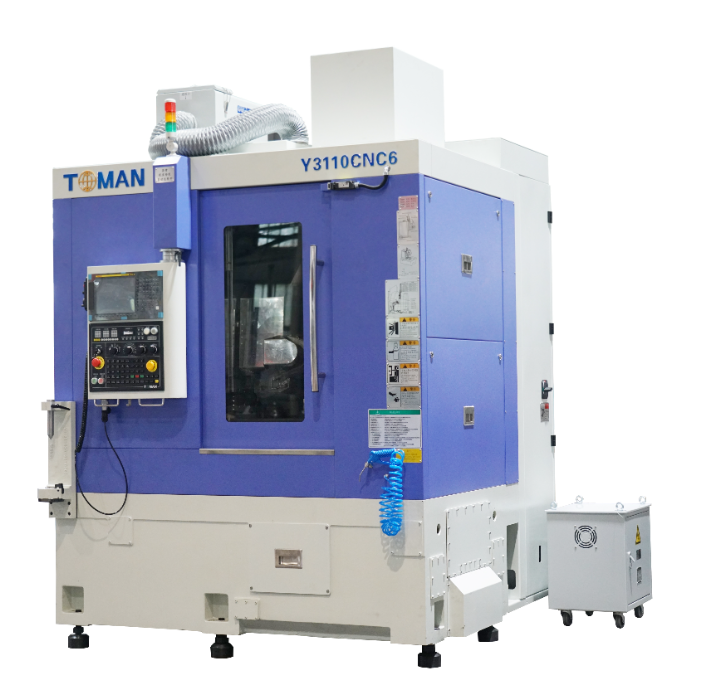
4. Processing Technology and Programming Proficiency
Scientific and reasonable processing technology is an important guarantee for improving the processing efficiency of hobbing machines. Processing technology includes the selection of processing methods, the arrangement of processing sequences, and the optimization of cutting parameters. For example, adopting a separate approach for roughing and finishing, where roughing is first used to quickly remove most of the allowance, followed by finishing to ensure gear accuracy, can not only improve processing efficiency but also guarantee processing quality. At the same time, advanced numerical control programming technology can give full play to the performance advantages of hobbing machines. Efficient programming can reduce idle travel time, optimize the cutting path, and achieve the rapid processing of complex gears. The programming personnel's understanding of processing technology and their proficiency in programming skills directly affect the level of processing efficiency.
5. Operator Skills and Equipment Maintenance Management
The skill level of operators and the status of equipment maintenance management also have a significant impact on the processing efficiency of hobbing machines. Skilled operators can accurately and quickly set processing parameters, reasonably select tools and processing technology, and promptly handle various problems that occur during the processing, thereby increasing the effective processing time of the equipment. Good equipment maintenance management can ensure that the hobbing machine always operates in an optimal state. Regular maintenance work such as lubrication and calibration can reduce the probability of equipment failures, minimize downtime for repairs, and guarantee the continuity and stability of production.
In conclusion, the processing efficiency of hobbing machines is comprehensively affected by many factors, including equipment performance, tools, workpiece materials, processing technology, and operators. For enterprises aiming to improve the processing efficiency of hobbing machines, they need to start from multiple dimensions, optimize equipment selection, rationally choose tools, adjust the process according to material characteristics, enhance programming proficiency, and strengthen personnel training and equipment maintenance management. Only by comprehensively considering and addressing these influencing factors can high - efficiency and high - quality gear hobbing processing be truly achieved, enabling enterprises to gain an edge in the fierce market competition.
About Zhejiang Toman Intelligent Technology Co., Ltd. (Toman)
Toman is a company that adheres to the strategic vision of to be the leader in the professional field, with the mission of innovation to drive customer value enhancement, and the business philosophy of WISE, ALWAYS KEEP STEP AHEAD. In operation since 2006, the company includes the complete range of gear hobbing machine, gear cutting machine, gear machining compound machine tools, gear shaving machine, automatic production units, automatic turning production lines, and MES manufacturing execution system, etc. TOMAN today, is recognised as an industry leader for machines in China.
Toman cutting machines:
CNC high precision gear hobbing machine, gear chamfering machine, gear shaving machine, gear hobbing machine with integrated chamfering station etc.
-Profitable -Intelligent -Accurate
Our machines are suitable for commercial vehicle gear, passenger vehicle gear, construction machinery gear, especially for the processing of new energy vehicle gear.
For more information about cnc gear cutting machines, please visit our website:
www.zjtoman.com
www.tomanmachines.com
For further information, please contact:
Sharon Gong
Master of Mechanical Engineering
Whatsapp/Wechat: +8613589398142
Mail: sharon@zjtoman.com
Skype: sharon.gong525